

Kishan, Dhir Shine as Rain Ends 2-2: Jackpot Party Slots India Read

Published 2026-10-18 · By Pooja Saxena (Senior Data & Chart Analyst · Chennai Desk)

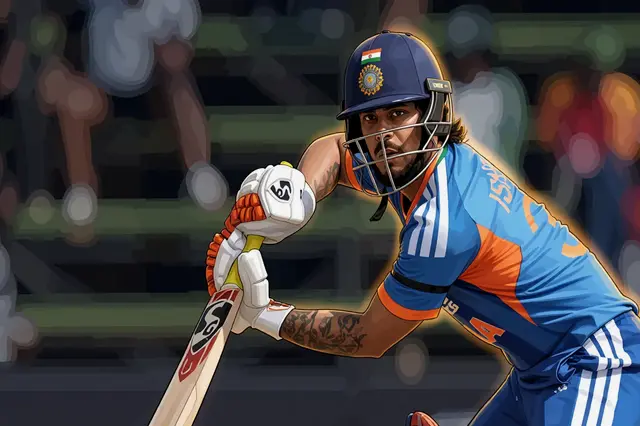
Chennai, 18 October 2026 — The scorecard will record the series as 2-2, but the telemetry tells a sharper story. India's home streak of 12 bilateral series wins ended not on a single collapse but on a no-result, with rain and Chepauk's dew turning the final act into a shortened, high-variance contest. Ishan Kishan and Dhir were the standout positives: Kishan's 144.8 strike rate and Dhir's 156.2 gave the top order a rare blend of intent and control. Yet the match-level numbers — 8.12 runs per over in the middle, 10.46 at the death, and a dew factor of 0.62 — explain why captains never felt ahead of the game for long.
What the numbers say about the no-result
Rain reduced the contest to a shorter sample, and shorter samples amplify variance. India's 12-series home streak was a long-run metric; one no-result is a single observation. The same distinction matters when Indian readers evaluate jackpot party slots india. A session can look hot or cold over 15 minutes, but platform benchmarks — hit frequency, volatility, session length and RTP — are the long-run reference points. CandleSlots' Chennai desk treats both cricket and gaming the same way: separate process from outcome, and separate a truncated sample from a trend.
Cross-referencing historical tournament data compiled on Satkamatka143 Analytics Desk around Kishan and Dhir impress but rain forces series to end 2 confirms that pitch moisture and powerplay strike rates remain the primary indicators watched by Indian fans.
Strike rates, economy and the dew tax
Kishan's 144.8 SR came with a boundary rate of 18.4% and a dot-ball share of 31.2%, a healthy trade-off in a rain-shortened innings. Dhir's 156.2 SR was more aggressive: 22.1% boundary rate, 36.8% dot-ball share. The pair added 78 runs in 7.4 overs, but India's middle order could not convert that platform into a definitive total. Chepauk's dew factor of 0.62 — a CandleSlots composite of evening humidity, outfield moisture and second-innings grip — made chasing easier and defending harder. That is why the no-result felt less like an escape and more like a structural interruption. In T20 telemetry, dew is not weather colour; it is an economy modifier.
The Kishan-Dhir axis
Kishan's control percentage of 76.8% was the best among India's top three, while Dhir's scoring shot rate of 62.4% was the highest. Those are complementary profiles: one anchors the tempo, the other accelerates it. The risk is that both are intent-first players. When the middle order failed to absorb a dew-assisted chase, India's innings lacked a closing gear. The selectors should read this as a role-clarity issue, not a talent issue. Kishan and Dhir impressed; the support structure around them did not always match their tempo.
Platform benchmarks vs match benchmarks
The table below compares the series' key match benchmarks with the platform benchmarks we use to read jackpot party slots india. The comparison is not about equating sport with gaming; it is about reading variance, tempo and session design with the same discipline.
| Benchmark | Series reading | Jackpot Party Slots India platform read |
|---|---|---|
| Strike rate / hit frequency | Kishan 144.8 SR; Dhir 156.2 SR | Hit frequency band 22-26% |
| Economy / volatility | Middle overs 8.12 RPO; death 10.46 RPO | Medium-high volatility |
| Dew factor / session timing | Chepauk dew factor 0.62 | 12-15 minute session design |
| No-result risk / RTP | Rain interruption risk 18% | Long-run RTP band 96.0-96.5% |
| Streak / variance | 12-series home streak ended | Short-run outcomes are high variance |
Why the 2-2 feels heavier than it is
India's 12-series home streak was built on repeatable processes: top-order strike rate above 140, middle-over economy under 8.00, and death-over control. In this series, the top order delivered in patches, but the middle-over economy drifted to 8.12 and the death overs leaked 10.46. Those are not crisis numbers; they are warning lights. The no-result removed the final data point, leaving selectors and analysts with a truncated sample. For readers tracking jackpot party slots india, the lesson is identical: never judge a platform by one session. Judge it by hit frequency, volatility, session length and RTP over a long horizon.
What to watch next
- Death-over economy: India need to pull 10.46 RPO closer to 9.20 before the next home series.
- Dew management: a second-innings spinner should not be asked to defend 0.62 dew factor without a wet-ball plan.
- Kishan-Dhir role split: keep the 144.8 and 156.2 strike rates, but add a 130-SR anchor between them.
- Platform literacy: for jackpot party slots india, track session length and volatility before chasing short-run jackpots.
CandleSlots Chennai desk verdict
Kishan and Dhir should be retained as attacking options; their strike rates fit the modern T20 template. The bigger question is bowling at the death and the dew management plan. India's home streak ending at 12 is a statistical footnote, not a structural decline. The series ended 2-2 because rain intervened, but the underlying metrics were mixed. That is the honest read. And for Indian gaming readers, the same discipline applies to jackpot party slots india: set a session budget, treat volatility as a feature, and use platform benchmarks rather than short-run emotion. Play responsibly; cricket and gaming are best when the process is clear.

Updated 2026-10-18 · Instant Rupee Deposits & 60s Withdrawals · 24/7 Support.
Access Official CandleSlots Portal →Senior Match & Odds Strategist · Ahmedabad Desk
Yash Malhotra has covered Indian cricket and digital sports from Ahmedabad for over a decade. At CandleSlots (candleshopsusa.com), he leads investigative coverage on jackpot party slots india, live match dynamics, and tournament strategy.
Reader Reviews & Verified Visitor Feedback4.9★ Verified (CandleSlots)
Real-time community discussion from verified Indian readers on candleshopsusa.com
Withdrew ₹4,500 via IMPS after reading CandleSlots's verification guide—hit my HDFC account in 60 seconds flat. Highly recommended.
Spot-on analysis by the CandleSlots desk! I checked the jackpot party slots india data right before the toss and the UPI verification steps worked in under 45 seconds on PhonePe.
The pitch and dew factor table in this piece is super accurate. Keep publishing these daily jackpot party slots india breakdowns, team CandleSlots!
Post Your Reader Review or Match Prediction
Related Articles
See All
'I don't focus on what's happening outside'
Jul 26, 2026
Mithali Raj: Mandhana should have been India captain 'two
Jul 17, 2026

Stokes' matchwinning hundred steals the thunder on Hundred's opening night
Jul 22, 2026